Ear Tip Size Guide
Try S, M or L tips, then use the seal checks to confirm a snug, comfortable fit.
“Which ear tip size should I use?”
Find the perfect earbud tip size for optimal bass performance and sound isolation. Compare silicone vs memory foam tips with an interactive seal check.
Published · Updated
- Interactive fix checklist with progress
- Step-by-step fixes for Windows, macOS, Android and iPhone
- Links to the matching interactive tests
- Runs locally in the browser, no install or upload
- Start quiet; protect your hearing
A browser check for finding faults, not a calibrated lab measurement. How our tests work
How to pick the right ear tip size
This ear tip size guide helps you choose which ear tips fit: the signs of a tip that is too small or too large, silicone vs foam, and how to check your IEM tip fit.
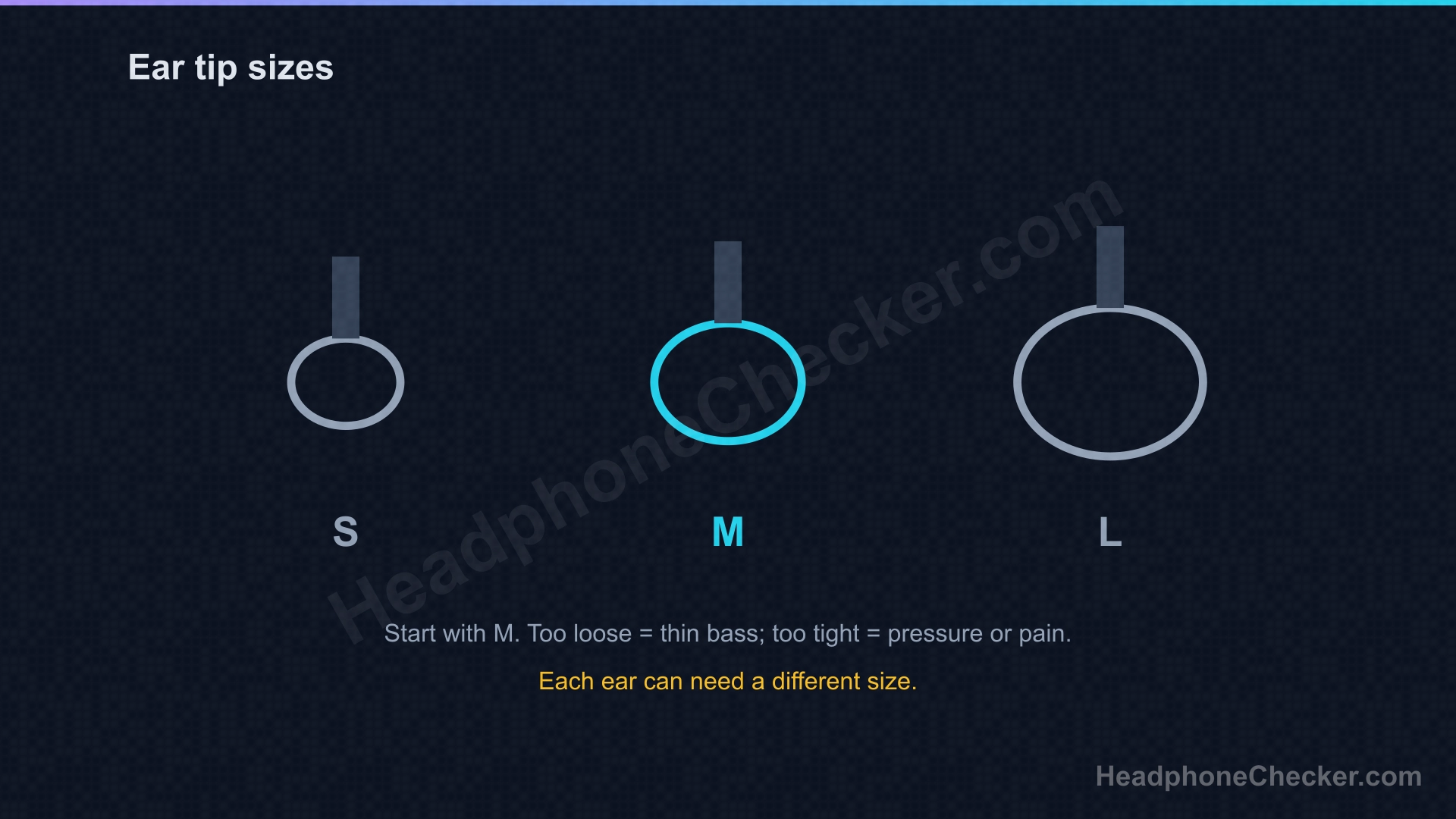
- Start with the medium tips that came fitted.
- Play music with bass and gently push the earbud in. If the bass grows a lot, the tip is too small or not deep enough.
- If the earbud works loose when you talk or chew, try one size up.
- If it hurts or feels pressured after a few minutes, try one size down or a softer tip.
- Your ears can need different sizes; mixing sizes is fine.
Foam tips expand to fill the ear canal and are forgiving, but wear out faster. Silicone tips last longer and are easier to clean. Confirm your choice with the IEM seal test.
Silicone, foam or double-flange tips?
- Silicone: durable, easy to wash and the tips most earphones are tuned with. Try every size in the box before buying others.
- Memory foam: compresses, then expands to fill the ear canal, so it seals easily and blocks more outside noise. Bass gets fuller and treble a little softer. Foam wears out, often within weeks to a few months.
- Double or triple flange: a deep fit with strong isolation, popular for stage use. Takes some getting used to.
- Wide-bore vs narrow-bore silicone: a wider opening sounds slightly brighter, a narrower one slightly warmer.
Replace tips when silicone tears or hardens, or when foam no longer expands slowly. A worn tip that used to seal well is one of the most common causes of bass that "disappeared" over time.
What to check next
If this test passed
If something was wrong
How to solve common issues
Tips keep slipping out
Go up a size and twist the earpiece slightly as you insert it.
Open related testPressure or pain
Go down a size or try a softer silicone or foam tip.
Bass still weak with a good fit
Clean the nozzle mesh and check the EQ.
Open related test
FAQ
How do I know if my ear tips are too small?
Are foam tips better than silicone?
Should both ears use the same tip size?
How often should I replace ear tips?
Privacy, safe volume and browser limits apply to every test: see how our tests work.